
Smart Electronix — Professional Device Repair & Diagnostics
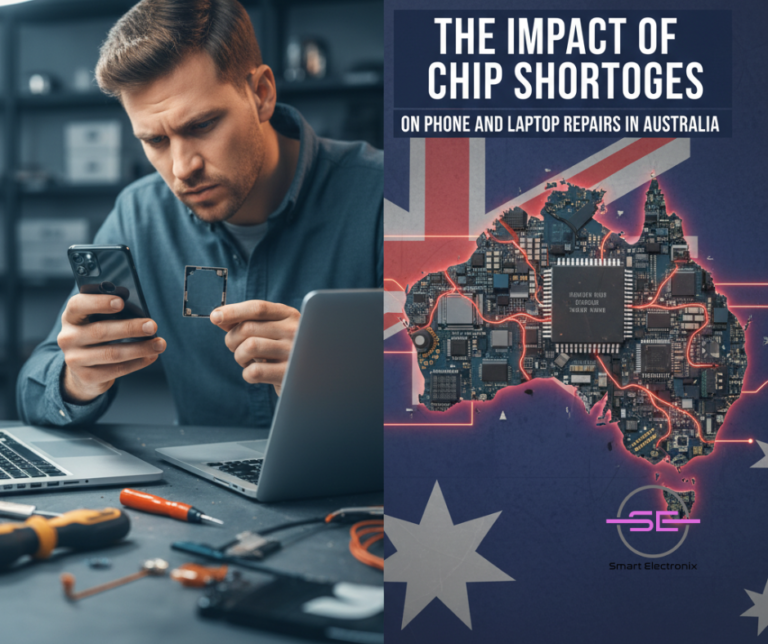
Over the last few years, Australians have experienced frustrating delays when repairing smartphones and laptops. Whether it’s a cracked iPhone screen that refuses to respond or a MacBook that won’t charge — one major issue is behind many of these challenges:
👉 The global chip shortage.
From everyday consumers to repair shops like Smart Electronix, chip scarcity has reshaped how and when devices can be fixed. Here’s what’s really happening — and what it means for your tech repairs in Australia.
🔍 Why Do Phones and Laptops Need So Many Chips?
Modern smart devices aren’t simple machines. They run on dozens of microchips responsible for:
✔ Power management (PMIC)
✔ Fast charging and USB-C ports
✔ Touch & display processing
✔ WiFi & Bluetooth connectivity
✔ Face ID & biometric security
✔ Storage and memory
Even replacing a screen or battery can require chip-level firmware pairing with the motherboard — something only specialized repair experts can handle.

🌍 How the Chip Shortage Began
The global chip shortage didn’t come from one single event — it was a chain reaction:
-
⛔ Pandemic factory shutdowns
-
🚢 Shipping disruptions
-
📈 Massive demand for electronics
-
🏭 Fewer production facilities
-
🛡️ Stricter government trade rules
The result? Fewer chips available worldwide — and intense competition to secure the parts needed for repairs.
🇦🇺 What the Chip Shortage Means for Aussies
Because Australia depends heavily on imported repair components, the shortage has created:
| Impact | What It Means for Consumers |
|---|---|
| Higher part costs | Some repairs cost more than before |
| Longer wait times | Spare parts may arrive weeks late |
| Limited aftermarket options | Cheaper parts risk failure |
| More complex repairs | Chip-level expertise now essential |
Even big brands cannot escape delays — especially for:
✅ iPhone logic board repairs
✅ Samsung charging IC failures
✅ Laptop motherboard repairs
✅ Graphics and power chips for gaming devices
🛠 Repair Shops Are Evolving
Instead of simply swapping damaged parts, Australian repair professionals must now:
✅ Perform micro-soldering instead of full board replacement
✅ Recover chips from recycled devices
✅ Validate compatibility using software tools
✅ Prioritize data safety while repairing core components
This shift means customers get:
✔ Better-quality repairs
✔ Less waste and landfill damage
✔ More affordable alternatives to replacement devices

♻️ A Positive Side: Better Sustainability
The chip shortage has pushed the repair industry toward:
🌱 Circular remanufacturing
🔧 Component re-use
♻️ E-waste reduction
Smart Electronix now refurbishes certain components or sources expertly remanufactured chips — reducing environmental impact without compromising performance.
💡 What You Can Do as a Consumer
To avoid delays and extra costs:
✅ Repair early — don’t wait for complete failure
✅ Book diagnostics before the problem spreads
✅ Use trusted repair specialists — not cheap shortcuts
✅ Choose high-quality tested parts
A damaged charging port today could become a motherboard replacement tomorrow.
🧩 How Smart Electronix Handles Chip Shortage Challenges
We ensure consistent service by:
✅ Maintaining trusted supplier relationships
✅ Stocking high-demand components locally
✅ Offering alternatives when imports are delayed
✅ Providing warranty-backed repairs
✅ Using expert chip-level repair techniques
Your device is repaired faster — with zero quality compromise.
✅ Final Thoughts
Chip shortages have changed how tech repairs work in Australia — but they’ve also pushed the industry toward smarter, more sustainable repair practices.
The key takeaway:
Repairs are still far cheaper and better for the environment than buying new. ✅
If your device is failing — don’t wait.
📍 Smart Electronix — Australia’s trusted repair specialists
🛠 Phone & Laptop Repair | Data Recovery | Chip-Level Repairs | Diagnostics & Support